Where Did the “True Name” Theme in Fantasy Speculative Fiction Books Come From?
🐇🕳️ A Writer's Research Rabbit Holes

If you’ve read Ursula K. Le Guin’s Earthsea series, you’ve come across this. There is a score of speculative fiction books with this recurring idea that knowing someone’s or something’s “true name” gives you power over them, or that true names have inherent magical significance. This theme draws from various folkloric and mythological traditions from ancient Egyptian beliefs about secret names to folklore about fairies and demons who could be controlled if you knew their real names. Isn’t that cool?? As an author and mythology nerd, this is fascinating and something I am squirreling away into my arsenal of inspiration for creative ideas.
💡 The Overall Big Idea: A name is intimately connected to the essence of a being. To name something is to have a kind of power over it, to understand and define it.

“Ged had neither lost nor won but, naming the shadow of his death with his own name, had made himself whole: a man: who, knowing his whole true self, cannot be used or possessed by any power other than himself, and whose life therefore is lived for life’s sake and never in the service of ruin, or pain, or hatred, or the dark.”
― Ursula K. Le Guin, A Wizard of Earthsea
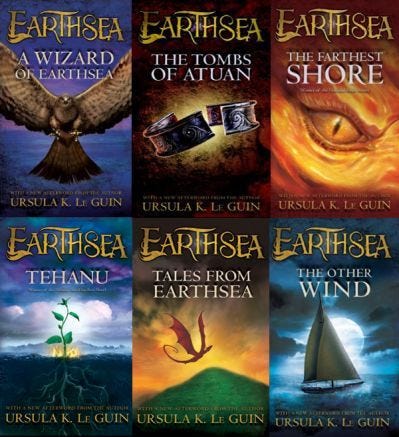
A few notable fantasy books featuring true names:
Ursula K. Le Guin’s Earthsea series (starting with A Wizard of Earthsea): In Earthsea, everything has a true name in the Old Speech, and knowing these names is the basis of magic. Wizards must guard their own true names carefully.
Patrick Rothfuss’s The Name of the Wind (The Kingkiller Chronicle): Features a magic system called “Naming” where understanding the true nature and name of things gives you power over them.
Robin Hobb’s Realm of the Elderlings series: True names play an important role, particularly with dragons and their naming conventions.
Roots in Mythology & Folklore
Ancient Egyptian mythology: The Egyptians believed everyone had multiple aspects of self, including the ren (true name). In one famous myth, the goddess Isis tricked the sun god Ra into revealing his secret name while he was weakened. By learning his true name, she gained power equal to his. Egyptians were sometimes given secret names known only to close family precisely to protect them from curses or magical manipulation.
European fairy folklore: Chock full of true name magic. In the famous tale of Rumpelstiltskin, the entire plot hinges on discovering the creature’s name—once the queen learns it, he loses all power over her. There’s a common belief across Celtic and Germanic traditions that you should never give fairies your real name, or they could enchant or control you. People would use nicknames or false names when dealing with the Fair Folk.
Jewish mystical traditions: Includes the idea that knowing the true names of angels and demons grants power. The legend of the Golem involves writing God’s true name (or related holy names) on the creature’s forehead to animate it. Removing or altering the name destroys it.
Several indigenous cultures: Traditions of secret names or multiple names. Some North American Native American tribes had public names and private spiritual names. In some Polynesian cultures, the names of chiefs were considered so powerful that if a chief’s name was a common word, that word would be temporarily replaced in everyday language.
Norse mythology: Knowing the true names of the runes themselves was considered a source of Odin’s power.